

Exposure Prioritization
Teams are drowning in CVEs ranked by CVSS scores that don’t reflect real-world exploitability, compensating controls, or business impact. Exposure Prioritization tells you exactly what to fix first, and what you can safely deprioritize.
























Experience CTEM in Action
Levelling up CTEM
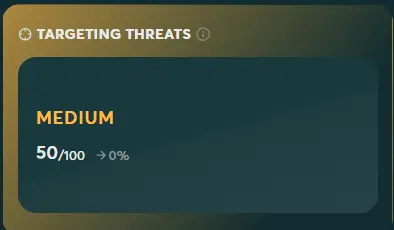
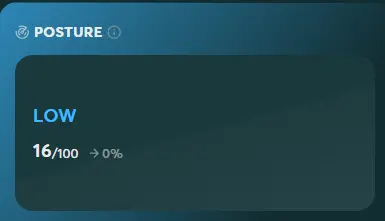
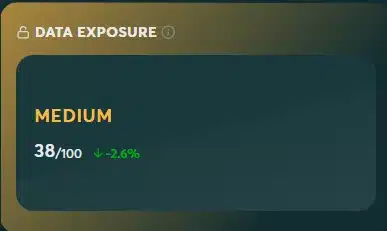
The Power of Consolidation

How it works
Uncover known and unknown assets and access points

Continuous Assessment

Threat-Intel Correlation

Business-Aware Scoring

Remediation Handoff
We have a really good relationship with customer support and the analyst teams.” Said Evans, “We are constantly being alerted about things to respond to. Because we’re a small team they are like an extension of us – which really helps from a risk management standpoint.
Evans Duvall, Cyber Security Engineer at Terex

In the POV we realized that Exposure Management was much more than an EASM solution, it delivered much value with highly relevant intelligence from the deep and dark web.
Benjamin Bachmann, Head of Group Information Security Office at Ströer

We looked at some other vendors and they have good solutions, but we needed more than what they could offer. With Exposure Management, I can continuously monitor not only all of Phoenix Petroleum’s domains, but all our digital assets, plus we get relevant intelligence from the deep and dark web.
Roland Villavieja, Information Security Officer at Phoenix Petroleum

We were looking to establish a new threat intelligence capability within Questrade and, in order to support that, we needed to have a platform that would give us deep insights.
With Infinity ERM, we’re not only getting intelligence from the general landscape but we’re also getting intelligence that’s really tailored to us and our environment.
Shira Schneidman, Cyber Threat & Vulnerability Senior Manager at Questrade

Once we identified the need to address the risk of fraudulent websites and social profiles, I quickly realized we needed to handle this in a scalable manner. Our solution is to use Exposure Management to help us automatically detect and takedown these threats.
Ken Lee, IT Risk and Governance Manager at WeBull

Resources



FAQs
What benefits can CISOs and security teams expect?
With Check Point Exposure Management, CISOs gain:
- Clear, measurable risk reduction with faster, safer remediation.
- Dramatically reduced MTTR—from weeks to hours
- Coordinated, cross-team remediation workflows
- Clear visibility into critical attack vectors and exposures
The outcome is a more resilient security environment, fewer blind spots, and stronger protection against emerging attacks.
How does Check Point prioritize which remediation actions to take first?
Remediation actions are prioritized through continuous assessment of:
- Misconfigurations and vulnerabilities across internal and external assets
- Business impact, exploitability and asset criticality
- Brand impersonation signals
- Dark web intelligence
- Active attacker tactics (APTs, TTPs, campaign activity)
This produces a contextualized remediation plan based on identified exposures most likely to be exploited. As a result, remediation becomes faster, more accurate, and aligned with actual attacker behavior.
What does “Safe Remediation” mean in Check Point’s Exposure Management?
Safe Remediation is the process of turning validated vulnerability insights into coordinated, non-disruptive fixes across security controls ensuring teams can reduce risk quickly without breaking production.
More specifically, Safe Remediation includes:
- Validation before enforcement
- Remediation without downtime
- Automated, coordinated action across controls
- Preemptive blocking of attacker infrastructure
- Safe-by-design automation
Safe Remediation ensures that vulnerabilities are fixed quickly, automatically, and without operational risk – turning detection into trusted, validated action.


